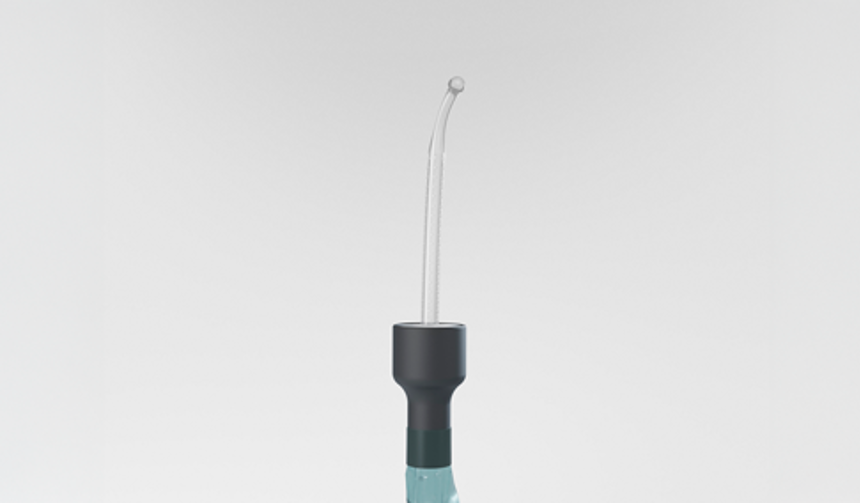
There are different types of catheters for different needs. Below, we explain external and intermittent catheters to help you understand the options available.
External catheters are also known as condom or “Texas” catheters. They fit over the penis and attach to a discreet collection bag, helping manage leakage without inserting a catheter into the bladder.
With intermittent catheters, patients insert and remove the urinary catheter several times a day, eliminating the need to wear a continuously draining catheter. They come in different types: Straight, Coudé and as closed-kit systems.
Straight catheters are designed for patients who have chronic bladder problems and are able to perform the catheterization themselves. They are typically available in straight and curved packaging, designed for males, females, even pediatric usage.
Coudé catheters have a slightly curved tip, designed for easy insertion. The curved tip is used to navigate around obstacles such as enlarged prostates or urethral strictures. More commonly used in men, coudé catheters can be used in women when they develop obstructions that require the use of catheter with a curved design.
Coudé catheters come in different types including tapered tip, olive tip, or Tiemann tip catheters. Interestingly, the design of the coudé catheter was created around 1800 by Dr. Emile Coude and was initially named a “biCoude” catheter, as it had two bends.
A closed system kit is a catheter that comes inside a sterile collection bag. This is the safest form of catheterization because the catheter does not come into contact with any bacteria before entering the bladder.